
Getting started

A common question I get is “What’s wrong with my violin?!” Ok, so that doesn’t always mean your violin is out of tune, but more often than not it translates into a question about tuning the violin.
I’m going to break this down into the actions taken in order to tune the instrument and then discuss music theory that’s good to know.
Remember that the strings of the violin, from thinnest in size (highest in pitch) to thickest in size (lowest in pitch) are E, A, D, G. I recommend starting with the A string whenever you tune your violin.
What you’re going to need to tune your violin
1) A tuner
This can take many shapes and forms.
It can either be a tuning fork, a pitch pipe, a piano (preferably a digital electric piano because it will be 100% in tune 100% of the time as opposed to an acoustic piano that will go up or down in pitch with atmospheric changes), a digital violin tuner that shows you the Hz of each frequency, a digital chromatic tuner or a variation of the digital tuners that exists on a webpage on the internet, or in an app.
A tuning fork, a pitch pipe, and a piano will require you to use your ear in order to make your string pitch match the pitch you are making on the fork, pipe, or piano.
Additionally, the piano will require you to know where the pitches that are the violin strings are located on the piano.
For this reason, I highly recommend either a digital violin tuner or a digital chromatic tuner. On a side note, the pitch fork and pitch pipe can be affected by the environment and therefore can go off true pitch.
Why do I differentiate between a digital violin and a digital chromatic tuner?
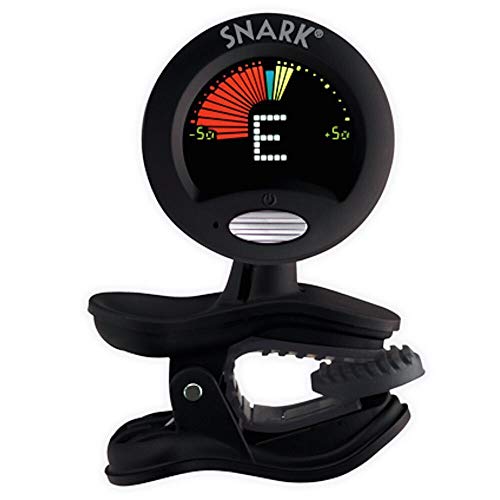
Because the violin tuner only tunes the 4 string pitches of the open strings on the violin while the chromatic tuner will tune ANY pitch it detects.
Even a pitch made by your voice if it uses a microphone. I personally prefer a chromatic tuner, but that is because of my experience as a musician.
If you are a complete novice, my advice is to get a chromatic tuner that shows the Hz of each pitch. Then, use the chart below to make sure you aren’t over tuning. This way, you don’t run the risk of breaking strings.
Standard violin string frequencies are:
G: 196 Hz
D: 293.7 Hz
A: 440 Hz
E: 659.3
2) Your violin with strings on it and ready to go.
3) Either your finger in order to pluck the strings or your bow to bow the strings.
If you’re using a violin/chromatic tuner that attaches to your instrument, you can use either, but plucking tends to work well this way.
Bowing, however, will always be a preferred method, especially in orchestras.
When First Tuning Your Violin…

If using the tuning fork, pitch pipe, or piano: Play the pitch of the string you want to tune, then play the string you are trying to tune.
The object is to match the pitch of the string with the pitch of the tuning device.
We run into a snag here because if we are absolute musical beginners, our ear may not be developed enough to match the pitches and even if they are, there is the issue of being able to find the pitch if it’s too far off.
We may end up breaking the strings. Or be too afraid to tune up the strings to pitch because we think they are getting too high.
For this reason, I recommend digital tuners.
Once we establish what type of tuner we will use, we need to physically match the pitch of the violin string to the pitch of the tuner.
Getting tough with the tuning pegs

Some tuning pegs are very snug in their peg holes. They may require a great deal of “elbow grease” to move.
The best way to work with them is to de-tune them and slowly and slightly pull them out of the peg holes as you do.
This loosens them and allows you to raise and lower the pitch much more freely.
ALWAYS TUNE THE STRING BY TUNING IT BACK “UP” TO THE PITCH.
Basically, start lower in pitch and end tuning higher in pitch.
Righty tighty lefty loosey is the rule of thumb here for tuning the instrument on the right side of the peg box, reverse this rule for the left side of the peg box.
As you tune the pitch back up, you will be also slightly pushing the peg back into the peg hole. This works to secure the pitch.
If the pegs are naturally tight and hard to turn, try pushing in less or not pushing in at all. If the pitch slips and de-tunes, use more elbow grease next time.
Finally Fine Tuning
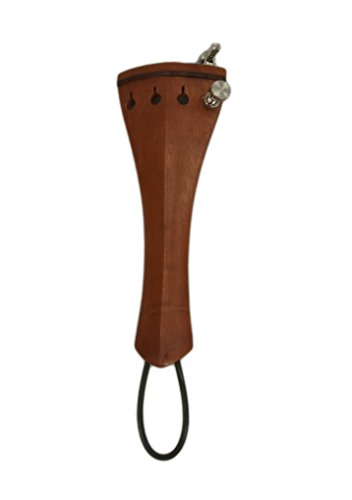
Fine tuners are located on the tailpiece of the violin. If you are a beginner, I recommend having fine tuners on all four strings of the violin.
In this way, we can tune the strings with the tuning pegs near the scroll for big adjustments and when we get very close but not perfectly in tune, we can simply adjust the fine tuners to match the pitch of the digital tuner for the string note we desire.
Check Your Violin Bridge

Now, after all this, you want to check your bridge and make sure it isn’t leaning too far forward.
This is a common occurrence. This can lead to the possibility of the bridge falling down and causing damage to the instrument.
If you’re uncertain what the bridge should look like, check out our “Bridge adjustment” article here at musilesson.com.
Final thoughts
And now you are ready to play a beautiful piece on a beautifully tuned instrument! But to help you even further, check out our How To: Tune Your Violin video!
Previous Article: How To Practice Effectively: Part 2
Next Article: How To Hold The Violin: Posture